
Precision Tree Removal & Sectional Extraction in Dallas, TX
What is technical tree removal? Technical tree removal is the systematic, controlled dismantling and extraction of dead, structurally decayed, or dangerous trees in space-constrained urban environments. In dense neighborhoods across Dallas, tree specialists rarely fell trees from the base. Instead, crews utilize aerial lifts, multi-point rigging pulleys, friction brakes, and heavy mobile cranes to lower heavy limbs and trunk wood piece by piece, protecting surrounding homes, fences, utility lines, and landscape beds.
For our complete citywide service overview, pricing factors, and direct estimate dispatch, visit our main tree removal in Dallas guide. To review how tree dimensions, rigging, and site accessibility influence quotes, read our in-depth analysis of tree removal costs in Dallas. This dedicated technical page covers the advanced rigging engineering, equipment capabilities, and municipal regulations governing complex tree extractions throughout Dallas County.
Signs Your Dallas Tree Requires Professional Extraction
Trees frequently exhibit structural weaknesses before experiencing a sudden collapse. If you observe any of the following symptoms on your property, schedule a prompt on-site evaluation:
- Abrupt or Shifting Lean: A tree that develops an obvious lean following heavy North Texas rains often indicates root plate failure in saturated Blackland Prairie clay.
- Trunk Cavities & Fungal Conks: Large internal hollows, wood-boring beetle emergence, or fungal conks at the trunk flare signal extensive heartwood decay.
- Dead or Snapped Canopy Boughs: Heavy deadwood overhanging roofs, driveways, or patios poses immediate life-safety hazards.
- Co-Dominant Stems with Included Bark: V-shaped multi-stem unions frequently split down the middle during spring squall lines and high winds.
- Lethal Pathogens: Advanced Texas Oak Wilt (Ceratocystis fagacearum) or Hypoxylon canker that has progressed past the point of viable therapy.
The Controlled Sectional Dismantling Methodology
The independent Dallas tree specialists in our dispatch network adhere to strict ANSI Z133 tree care safety standards. Precision tree extraction follows an exacting process:
- Pre-Work Hazard & Drop-Zone Assessment: The crew leader inspects the ground stability, assesses Oncor electric line proximity, and establishes a secure safety perimeter.
- Aerial Rigging & Anchor Points: Climbers or aerial bucket operators rig high-tensile lowering lines and friction blocks to secure limbs before directional chainsaw cuts are made.
- Sectional Dismantling: Limbs are removed in manageable sections and lowered smoothly to ground technicians, who feed branches directly into commercial wood chippers.
- Trunk Sectioning: The main trunk is taken down in manageable wood rounds using controlled drop techniques or crane pick points.
- Debris Hauling & Site Cleanup: Grounds are raked, hard surfaces power-blown, and timber hauled away. Homeowners often bundle their project with subterranean stump grinding and removal to prepare the site for fresh sod or planting.
Post-Removal Stumps & Timber Management
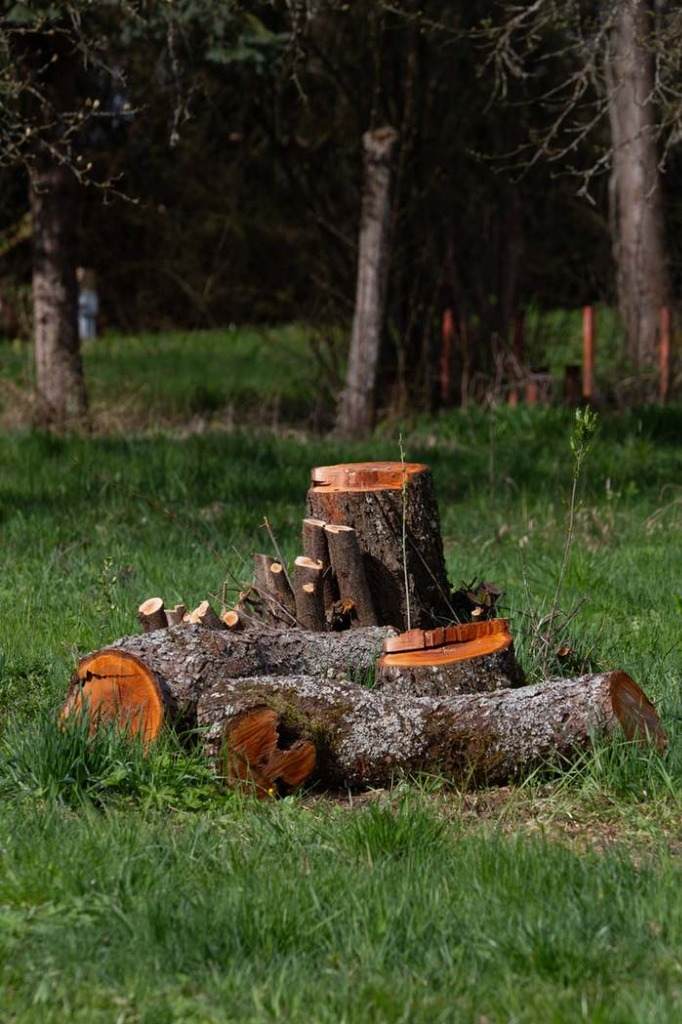
Once the upper canopy has been dismantled and the trunk sectioned into manageable wood rounds, property owners can choose how the remaining timber and base are handled. Trunk sections can be hauled away entirely or retained as firewood rounds for residential use.
The remaining ground-level stump can be assessed for subterranean stump grinding, which pulverizes the wood below grade to allow clean replanting or sod installation without disturbing surrounding turf.
Palm Tree Removal in Dallas
Property owners across Dallas frequently request assessments for palm trees following hard North Texas winter freezes, severe storm winds, or when mature palms outgrow confined swimming pool surrounds. However, visible leaf browning or drooping fronds does not by itself establish that removal is necessary. Because palms are monocots dependent on a single apical growing point, trees often require weeks of warm seasonal weather before an assessment can confirm whether the terminal bud is active or fatally damaged.
When palm tree removal in Dallas is required, independent tree specialists evaluate several critical site factors before proposing an extraction plan:
- Structural Soundness & Weight: Saturated palm trunks retain immense water weight in fibrous tissue, demanding controlled sectional cutting and specialized lowering techniques.
- Drop-Zone & Access Constraints: Proximity to pool equipment, masonry walls, patio decks, and overhead utility lines dictates rigging setup. Where hanging fronds or leaning trunks pose immediate falling dangers, visit our emergency tree service in Dallas resource.
- Debris Hauling & Disposal: Coarse palm fronds and stringy trunk fiber cannot be processed through standard wood chippers, requiring dedicated green waste transport.
- Fibrous Root Balls: Palm root systems do not develop deep taproots, but their dense root mats often require dedicated stump grinding or excavation before replanting.
If your palm is structurally sound and simply crowded with old foliage, routine maintenance on our tree trimming and pruning page may be sufficient. An independent local contractor will examine your property in person, verify physical access, determine provider suitability, and prepare a clear written quote. Call to discuss palm-tree removal needs and available provider options at (945) 888-0370.
Navigating the City of Dallas Tree Removal Regulations (Article X)
The City of Dallas maintains a comprehensive tree preservation program under the Article X Tree Preservation Ordinance. On single-family properties and commercial parcels, removing protected trees (measuring 8 inches or greater in Diameter at Breast Height) may require municipal permits or formal verification confirming the tree is dead, severely diseased, or constitutes an immediate safety hazard. Tree contractors in our network can evaluate your tree's viability and provide documentation to satisfy municipal inspectors.
Equipment Capabilities: From Compact Loaders to Heavy Cranes
Tight suburban lot layouts in Dallas require adaptable machinery. Partner crews deploy compact mini-skid steers capable of passing through standard 36-inch backyard gates while using turf protection mats to prevent rutting in soft clay soils. For severely unstable trees leaning over roofs or in inaccessible courtyards, mobile crane units hoist multi-ton canopy sections vertically out of the yard, completely bypassing fences and landscaping. For immediate crisis response after severe weather, visit our emergency tree service in Dallas page.
Chainsaw Wood Sectioning & Timber Processing
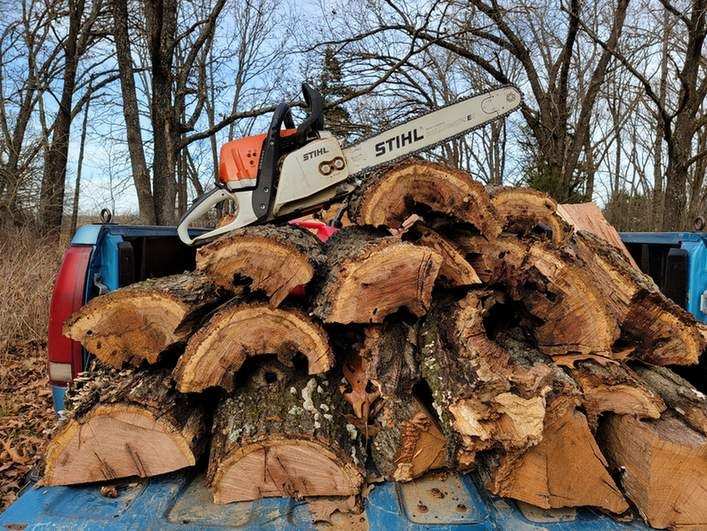
Ground crews utilize high-powered professional chainsaws to buck heavy tree trunks into manageable lengths. Large wood rounds can be split and loaded onto transport vehicles for off-site processing, or cut into uniform firewood dimensions at the homeowner's request.
Equipped contractors ensure cut timber is safely cleared from lawn turf, driveways, and access routes.
Request an On-Site Property Assessment
Need an exact, itemized estimate for your tree extraction? Call our Dallas dispatch desk at (945) 888-0370. We will connect you with an experienced local tree contractor who will evaluate your property in person and provide a transparent, written quote.
Frequently Asked Questions
Can a declining tree be saved instead of extracted?
In many instances, yes. If a tree has structural flaws but retains healthy foliage and solid root anchors, solutions like tree cabling and bracing or corrective canopy trimming can relieve leverage weight and extend its safe lifespan. An on-site assessment determines whether preservation is viable.
Will heavy tree equipment damage my lawn or driveway?
Professional tree crews take precautions. Heavy-duty ground protection mats are deployed over turf to disperse equipment weight and prevent rutting in damp Texas clay soils, and tires are kept off delicate sprinkler heads.
What happens to the wood and logs after the tree is taken down?
Crews chip all branches and haul away large wood logs unless you specifically request that the trunk be cut into firewood rounds for personal use. The work area is thoroughly raked and swept clean.